Home » BIRDING IN UGANDA: PREMIER UGANDA BIRDING TOURS & SAFARIS IN AFRICA’S TOP BIRDWATCHING DESTINATIONS
BIRDING IN UGANDA: PREMIER UGANDA BIRDING TOURS & SAFARIS IN AFRICA’S TOP BIRDWATCHING DESTINATIONS
Discover the unparalleled experience of birding in Uganda — a destination renowned for its exceptional birdwatching opportunities across some of Africa’s finest habitats.
Uganda’s diverse ecosystems, including rainforests, savannahs, wetlands, and mountainous regions, and compact geography, make it a premier location for avid birders seeking to explore over 1,073 bird species, including many Albertine Rift endemics, representing nearly 50% of Africa’s avifauna and 11% of the world’s bird species.
Why Choose Uganda for Birdwatching?
Often hailed as the birding capital of Africa, Uganda offers a unique combination of ecological diversity and accessibility.
Covering just 241,038 km² (comparable in size to Britain), Uganda hosts 34 designated Important Bird Areas (IBAs) featuring rainforests, savannahs, wetlands, rift valleys, and mountainous regions.
This rich habitat variety supports both resident and migratory birds, including 24 of the 25 Albertine Rift endemic species, making Uganda an unmatched birdwatching destination.
Uganda’s Endemic & Notable Bird Species
Endemic Bird Species Unique to Uganda
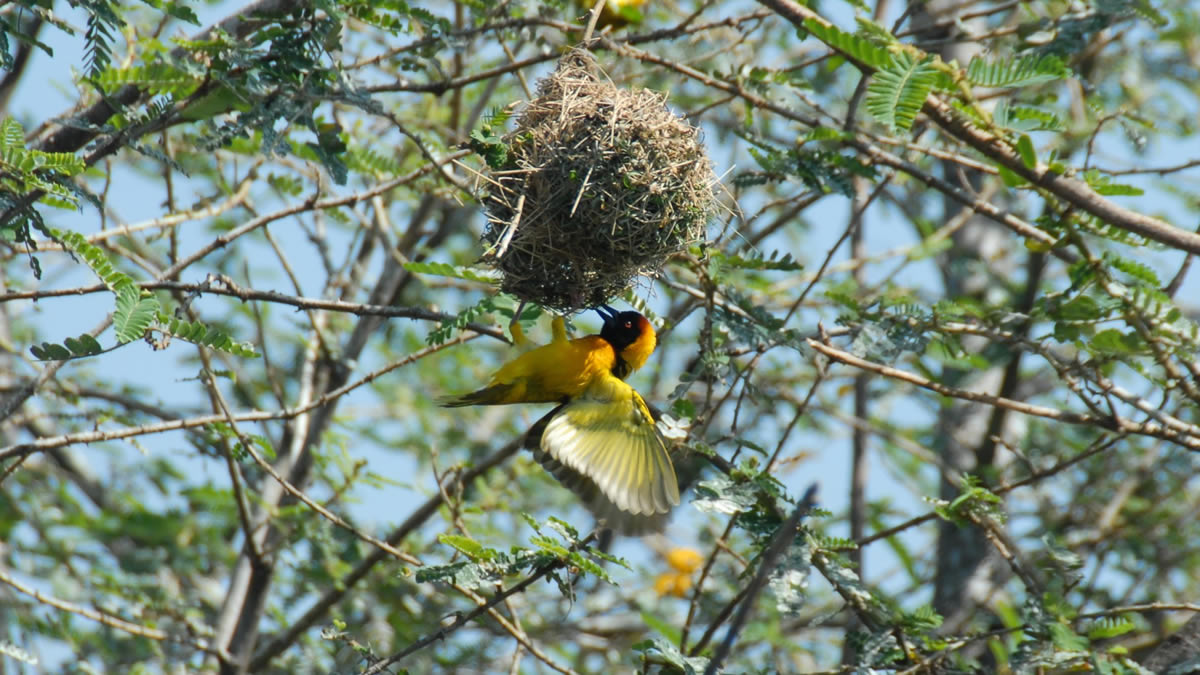
Uganda’s only true endemic bird, the Fox’s Weaver, thrives in eastern wetlands such as Lake Opeta.
Albertine Rift Endemics to Spot on Uganda Birding Tours
Meanwhile, the Albertine Rift Valley region, characterized by lakes, mountains, and tropical rainforests, is home to spectacular Albertine Rift endemics, including
- Shelley’s Crimsonwing
- Grauer’s Broadbill—one of the most sought-after Albertine Rift endemics in Uganda
- Rwenzori Batis
- Kivu Ground Thrush
- Regal Sunbird
Other several species of birds seen when birding in Uganda include the Collared Apalis, Handsome Francolin, Rwenzori Turaco, Archer’s Robin-Chat, Strange Weaver, Red-Throated Alethe, Mountain Masked Apalis, Stripe-Breasted Tit, Blue-Headed Sunbird, Purple-Breasted Sunbird, Rwenzori Nightjar, Dwarf Honeyguide, Red-Faced Woodland Warbler, Dusky Crimsonwing, African Green Broadbill, Grauer’s Warbler, Neumann’s Warbler, Yellow-Eyed Black Flycatcher, and Chapin’s Flycatcher.
These Albertine Rift endemic species predominantly inhabit protected areas such as Bwindi Impenetrable Forest, Semuliki National Park, and Rwenzori Mountains National Park.
Migratory Birds in Uganda
Situated along major migration corridors, Uganda welcomes nearly 300 migratory bird species annually from Europe, Asia, Siberia, and Southern Africa, particularly between November and April.
Notable migratory species include the African Spoonbill, Common Cuckoo, Malagasy Pond Heron, White-Winged Tern, and Greater Flamingo.
Uganda’s rich habitats and favorable climate offer perfect conditions for these avian visitors, enhancing the diversity and spectacle of Uganda birding safaris.
Other Must-See Birds on Your Uganda Birdwatching Safari
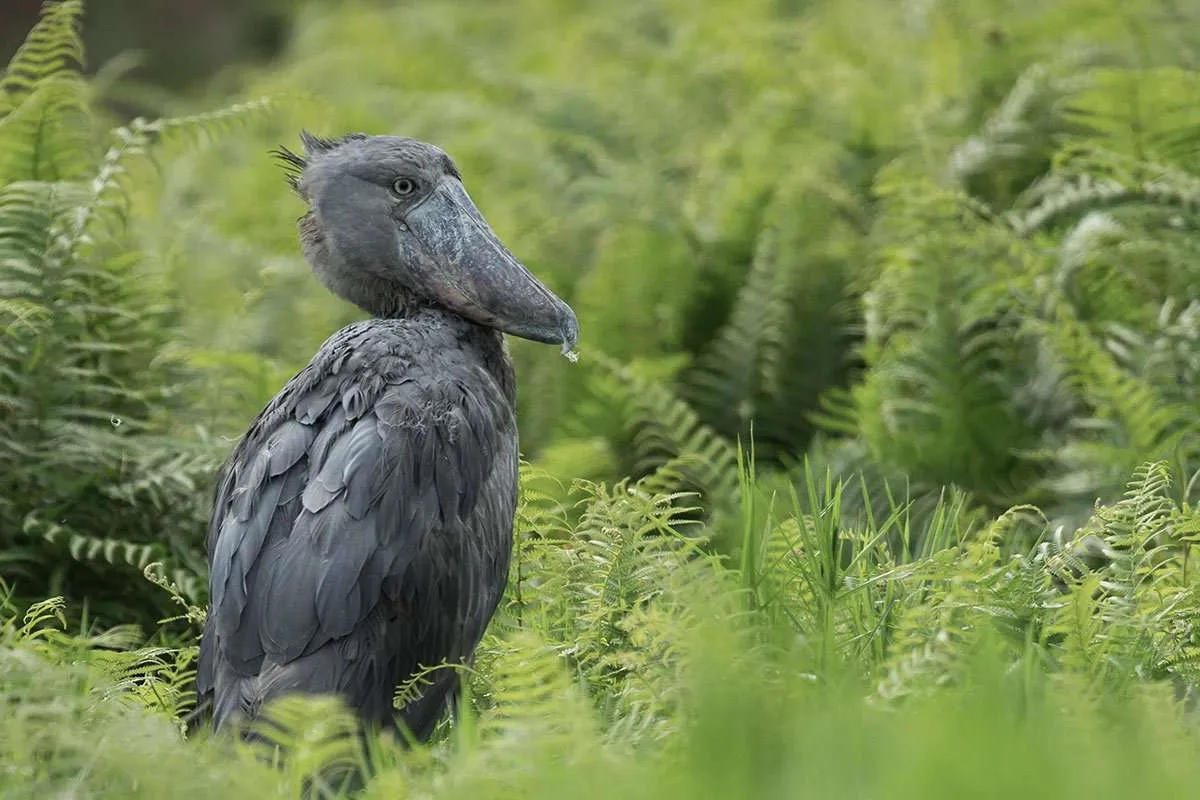
Other iconic species sought after by birders on birding tours in Uganda include the elusive Shoebill Stork, famously found in Mabamba Swamp, and the secretive Green-Breasted Pitta of Kibale National Park. Other highlights include
- African Green Broadbill
- Blue Turaco
- Grauer’s Warbler
- Yellow-eyed Black Flycatcher—an endemic species native to the Albertine Rift Area
- Papyrus Gonolek
- Handsome Francolin
- Rwenzori Turaco
- African Fish Eagle
- Blue-headed Sunbird
- Chapin’s Flycatcher
- Red-faced Woodland Warbler
- Red-chested Sunbird
- White-bellied Robin Chat
- Red-throated Alethe
- Golden-winged Sunbird
- Lizard Buzzard
- Masked Apalis
- Papyrus Yellow Warbler (a Lake Victoria biome species of avian)
- Yellow-Billed Duck
With thousands of migratory and resident birds, Uganda is truly a birdwatcher’s paradise worth exploring for the most remarkable birding tours.
Top Bird Watching Destinations in Uganda to Go to for Birding Safari Excursions
Uganda boasts 34 Important Bird Areas (IBAs) designated for exceptional birdwatching and birding tours. Some of the best Uganda birding hotspots and IBAs include.
Queen Elizabeth National Park
Home to over 600 bird species, Queen Elizabeth National Park is one of Uganda’s richest birding locations and East Africa’s most diverse.
Its rich habitats—spanning savannahs, wetlands, and forests across Mweya Peninsula, Kasenyi, Katwe Area, Ishasha sector, Kazinga Channel, Maramagambo Forest, and Kyambura Gorge—make it a haven for birdwatching.
Key species include the Shoebill, Grey-Crowned Crane, Green-Breasted Pitta, Papyrus Gonolek, and many more.
Additionally, the park’s diverse landscapes—from savannah to wetlands—also offer exceptional mammal sightings of the elephants and buffalo, complementing your birding and wildlife adventure in Uganda.
Bwindi Impenetrable Forest National Park
Bwindi Impenetrable National Park, located in Uganda’s Albertine region, is hailed by the African Bird Club as Africa’s foremost birding hotspot, boasting 24 of 25 Albertine Rift endemic bird species, a number not recorded anywhere else in the country or in Eastern Africa.
A birding trip to Bwindi, one of the best birding hotspots, highlights species like the African Green Broadbill (Grauer’s Broadbill) in Ruhija’s Mubwindi Swamp, the Regal Sunbird, the Black Bee-eater, the White-bellied Robin Chat, and many more Avians.
Combining top-tier birdwatching with mountain gorilla tracking, Bwindi offers a unique dual avian and wildlife safari experience, making it an essential destination for Uganda’s nature enthusiasts.
Semuliki National Park
Located in Uganda’s Albertine Rift, Semuliki National Park, a small area park in the country (220km²), is a premier birding destination and one of the best, renowned for its Guinea-Congo forest biome and home to over 435 bird species, including 23 Rift endemics.
A Birding trip here offers sightings of rare species such as the Spot-breasted Ibis, Shoebill, Malachite Kingfisher, Congo Serpent Eagle, and many more Avians, attracting enthusiasts for unforgettable avian adventures in the country.
In addition to its diverse birdlife, Semuliki supports African mammals like elephants, enhancing its appeal as a complete safari destination in Central East Africa’s ancient biodiversity.
Murchison Falls National Park (Haven for Red-Throated Bee-Eater)
With over 556 species, Murchison Falls National Park, along the Victoria Nile (Nile River), is famous for the Red-Throated Bee-Eater, African Fish Eagle, and Malachite Kingfisher. It’s a vital birding and fauna destination, especially during migration seasons.
Other iconic sightings seen on a birding tour feature many birds like the Shoebill, Malachite Kingfisher, African Fish Eagle, and Red-Throated Bee-Eater, alongside migratory birds from November to April.
The park’s diverse ecosystems also support African mammals like buffalo, giraffes, and elephants, drawing birdwatchers for exceptional avian adventures in Uganda and East Africa.
Mabamba Swamp (Prime Location for Shoebill Spotting)
The premier location in Uganda, East Africa, and Africa at large to observe the elusive Shoebill Stork, Mabamba Swamp, or Mabamba Bay Wetland, is a biodiversity hotspot with over 300 bird species, including the Papyrus Yellow Warbler, Blue Swallow, and many more Avians.
Mabamba Swamp, situated on the northern shores of Lake Victoria, hosts over 300 bird species, including Lake Victoria biome and globally threatened species.
The swamp is a magnet for birdwatchers, especially from November to April during migratory bird seasons.
Key species to spot when bird watching include the Green-breasted Pitta, White-winged Warbler, Papyrus Yellow Warbler, Hamerkop, and Blue Swallow.
Mabamba’s rich wetlands make it an essential destination for exceptional birding tours in Uganda.
Mgahinga Gorilla National Park
A compact park in the Rift Valley covering a small area and one of the best birding hotspots in the country, Mgahinga Gorilla National Park offers excellent birding with over 180 species and is ideal for combining birdwatching with gorilla trekking.
Its avian population includes 12 Albertine Rift endemics, such as the Rwenzori Turaco, White-bellied Robin Chat, African Olive Pigeon, and Scarlet-tufted Malachite Sunbird, among others.
The park offers a unique opportunity to blend bird watching with mountain gorilla tracking tours, a highlight of Ugandan tourism.
Visitors can also spot golden monkeys and African elephants and enjoy the stunning Virunga ranges, shared with Rwanda and the DRC, making Mgahinga an unforgettable destination for the best birding tours and wildlife adventures.
Lake Mburo National Park (Haven for The African Finfoot and Grey Crowned Crane)
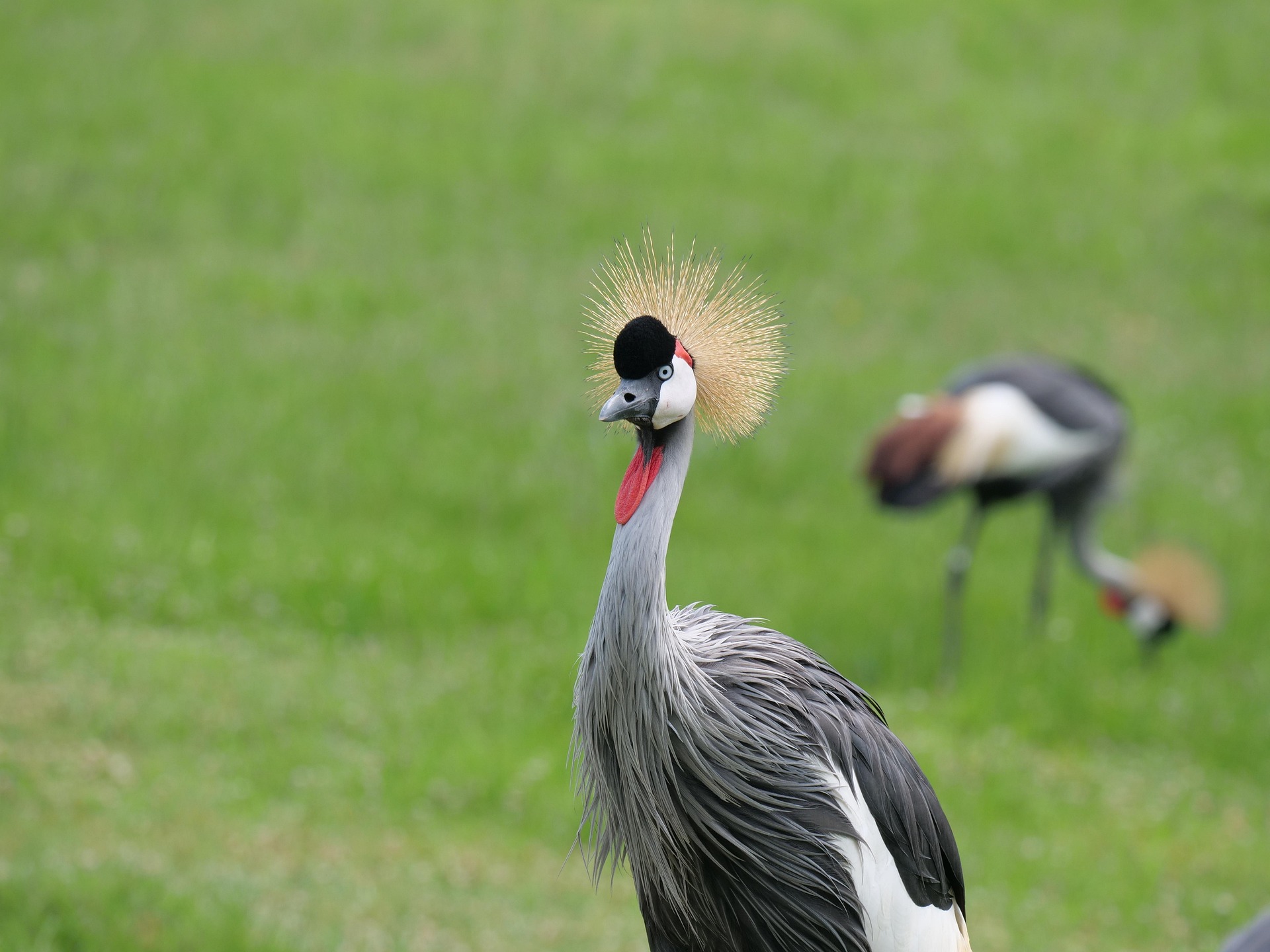
Known for species such as the African Finfoot and Grey Crowned Crane, Lake Mburo National Park, located in Uganda’s Albertine region, combines woodland and wetland habitats to provide a diverse birdwatching experience.
Other notable species include the African Finfoot, Shoebill, Papyrus Gonolek, Black-bellied Bustard, White-headed Barbet, and Spot-flanked Barbet.
The park’s swamps attract migratory birds from November to April, enhancing its appeal for birdwatchers.
Lake Mburo’s diverse habitats make it one of the top birding hotspots in the country and an essential stop for unforgettable birding tours in Uganda.
Kibale National Park
Famed for primates, Kibale in western Uganda also supports over 370 bird species, including the rare Green-Breasted Pitta, Crowned Eagle, and many more Avians, making it one of the top-notch birding areas in the country.
Other standout species in the country park include the elusive Green-Breasted Pitta, Great Blue Turaco, Papyrus Yellow Warbler, and many more Avians.
The nearby Bigodi Wetland Sanctuary enhances the birding experience with additional opportunities to observe diverse avian life.
Kibale’s rich biodiversity and scenic forest setting in the country make it an essential stop for birdwatchers exploring Uganda, East Africa.
Kidepo Valley National Park
A remote gem and one of the most spectacular parks in Uganda, known for its bird diversity with over 470 bird species, Kidepo offers unique sightings like the Common Ostrich and Kori Bustard alongside iconic East African wildlife.
The park excels as a raptor haven, boasting 56 species. While it hosts fewer African Great Lakes birds, standout species include the Common Ostrich, Karamoja Apalis, Little Bee-eater, Jackson’s Hornbill, Kori Bustard, and Golden Pipit.
Bird-watching safaris are enriched by sightings of wildlife such as cheetahs, African elephants, buffalo, and antelopes, making Kidepo a must-visit for birders and nature enthusiasts alike.
Rwenzori Mountains National Park (A Hub for Rare Rwenzori Double-Collared Sunbird)
Known as the “Mountains of the Moon,” this park features 217 bird species, including the rare Rwenzori Double-Collared Sunbird and Bearded Vultures.
Plus, it is worth noting that the Rwenzori Mountains National Park is home to 19 Albertine Rift endemic bird species in the country.
Some of these vibrant birds, like the Rwenzori Turaco, Rwenzori Double-Collared Sunbird, Golden-winged and Blue-headed Sunbirds, White-starred Robin, Archer’s Robin-chat, Cinnamon-chested Bee-eater, and many more Avians, thrive here, while majestic Black eagles soar overhead, as seen when on a bird watching tour in the country.
Mount Elgon National Park
Home to over 300 bird species, this highland park offers sightings of 56 Afro-tropical highland biome specialists and 40 regionally restricted endemics like the Elgon Francolin, Lammergeyer, and Tacazze Sunbird amid stunning alpine scenery.
Further birds and delights include the Cinnamon-chested Bee-eater, Ross’s Turaco, and Red-chested Cuckoo, alongside many other avian gems.
Although it’s not renowned for big game like African elephants, occasional glimpses of buffalo and monkeys add to the adventure during a Uganda trip or birding tour in the country.
Other Key Important Bird Areas (IBAs) in Uganda
As designated by Birdlife International and the International Union for Conservation of Nature (IUCN), these many other birding hotspots in the country include:
- Echuya Forest Reserve: A vital avian hotspot, safeguarding 18 of the 24 Albertine Rift endemic bird species in the country.
- Budongo Forest: Renowned for the Royal Mile trail, hosting over 250 bird species.
- Ziwa Rhino Sanctuary: An important site for bird conservation to see the many avians it packs.
- Mabira Forest Reserve: A significant area for diverse bird populations worth journeying to when on a Uganda bird-watching trip.
- Kyambura Wildlife Reserve: Recognized for its rich birdlife.
- Nyamuriro Swamp: A key wetland supporting various bird species.
- Sango Bay Area: An essential habitat for birds.
- Lutoboka Point: A notable birdwatching location.
- Nabugabo Wetland: A critical wetland for bird conservation.
- Lutembe Bay: An important coastal bird habitat.
- Lake Victoria and its surroundings: One of the African Great Lakes, a major hub for bird diversity.
- Mt Kei Forest Reserve: One of the forested areas supporting unique bird species seen on a Uganda bird-watching trip.
- Mt Otzi Forest Reserve: Another key forest for avian conservation.
- Lake Nakuwa: A significant lake habitat for birds.
- Lake Bisina: One of the important sites for wetland bird species seen when on a Uganda birding trip.
- Lake Opeta: One of the critical areas for bird conservation while on a Uganda bird-watching trip.
Guidelines for a Successful Birdwatching Safari in Uganda
- Remain on designated trails to ensure safety and minimize disturbance.
- Maintain silence to enhance bird visibility.
- Travel in small groups with expert local guides for the best experience.
- Carry snacks, water, and appropriate gear for comfort.
- Avoid startling birds by moving slowly and respectfully.
Recommended Lodges for Birding Tours in Uganda

Luxury options include Mweya Safari Lodge, Chobe Safari Lodge, and Clouds Mountain Gorilla Lodge. Midrange accommodations such as Enganzi Game Lodge and Kidepo Savannah Lodge offer comfortable stays, while budget lodges like Pumba Safari Cottages provide economical choices near key birding sites.
Combine Birding with Gorilla Trekking & Wildlife Safaris
Birding tours often combine visits to multiple national parks for a comprehensive experience.
For an extraordinary wildlife adventure, combine your birding tour with gorilla trekking in Bwindi Impenetrable National Park or Mgahinga and game drives in parks like Queen Elizabeth National Park or Murchison Falls National Park. This multi-faceted safari offers an unmatched East African experience of endemic birds, majestic mammals, and breathtaking landscapes.
Best Time for Birdwatching in Uganda
Bird watching safaris in Uganda are possible year-round, but the best conditions occur during the dry seasons from June to August and December to February, when trails are dry, less slippery, and easier to navigate.
Late May to September is particularly ideal for Uganda birding tours due to minimal rainfall and abundant food, enhancing bird activity and visibility.
Early mornings and late afternoons are the prime times of day for spotting active bird species, including Albertine Rift endemics like the Green-Breasted Pitta and African Green Broadbill, during Uganda birding safari excursions.
Additionally, November to April is optimal for observing migratory birds, making it a great period for diverse birdwatching experiences in Uganda’s national parks, such as Queen Elizabeth National Park, Bwindi Impenetrable National Park, Murchison Falls National Park, Lake Mburo National Park, and Kibale.
Essential Birding Safari Tips for Birdwatchers
- Bring quality binoculars and a camera.
- Wear comfortable, protective clothing, including long sleeves and trekking shoes.
- Use insect repellent and sunscreen.
- Hire experienced local birdwatching guides for expert insights.
- Stay hydrated and carry snacks for longer excursions.
Indigenous Birdwatching Guides in Uganda, East Africa
Local birdwatching guides in Uganda are trained in bird identification all resident species at birding sites and can assist in spotting both common and rare bird species.
They bring unparalleled expertise to Uganda birding tours, guiding enthusiasts through prime locations like Queen Elizabeth National Park, Bwindi Impenetrable National Park, and Murchison Falls National Parks.
With deep knowledge of habitats and bird species, they help spot elusive birds such as the African Green Broadbill, Great Blue Turaco, and the rare Shoebill Stork, ensuring unforgettable birding experiences across Uganda’s diverse landscapes, including the Albertine Rift and Lake Victoria.
Top Rated Birding Books for Uganda Birding Safaris
For birdwatchers seeking to enhance their Uganda birding adventures, whether single-day or running for days, top birding books offer detailed insights into identifying species, their behaviors, feeding, breeding, and taxonomy.
These Uganda local guides enrich single-day or multi-day birding tours across East Africa. Recommended titles include:
- Field Guide to the Birds of East Africa: Kenya, Tanzania, Uganda, Rwanda, and Burundi by Terry Stevenson and John Fanshawe.
- East Africa Birds: A Folding Pocket Guide to Familiar Species in Kenya, Tanzania & Uganda by James Kavanagh.
- Where to Watch Birds in Uganda by Russouw and Sacchi.
- Pocket Guide: Birds of East Africa by Dave Richards.
- Bradt Travel Guides, Uganda by Philip Briggs and Andrew Roberts.
Top Tour Operators for Birding Holidays in Uganda
For memorable birding safaris in Uganda, top tour operators like Wild Gorilla Safaris, Prime Safaris And Tours Ltd., Safari Uganda Safaris, A Uganda Safari, Africa Safaris Tours, and Uganda Birding Safaris offer expertly curated trips that run for single or multiple days.
These operators offer single-day or four-week trips (multi-day bird watching tours) that explore Uganda’s rich birdlife, including endemic species such as the Green-breasted Pitta, Fox’s Weaver, Grauer’s Broadbill, Yellow-eyed Black Flycatcher, and Rwenzori Turaco, among others, alongside iconic wildlife like African mammals, mountain gorillas, and chimpanzees in national parks like Kibale, Semuliki, and the Rwenzori Mountains.
What to Pack for a Birding Safari in Uganda?

For a successful birding adventure in Uganda that can run for days, bring essentials like a birding guidebook, high-quality binoculars, a camera, sunscreen, insect repellent, a waterproof backpack, snacks, and a water bottle.
Additional useful items for birding in Uganda include a rain jacket, a flashlight for spotting nocturnal birds like nightjars, and a first aid kit, particularly for challenging birding tours in East Africa’s rugged landscapes.
What to Wear for Bird Watching in Uganda?
To ensure comfort and safety on birding tours in places like Queen Elizabeth National Park, Bwindi Forest National Park, Lake Mburo National Park, or Rwenzori Mountains National Park for several days, wear long-sleeved shirts, long trousers, and sturdy trekking shoes, among others.
A wide-brimmed hat or sunglasses are recommended for sun protection during hot days.
Proper attire helps birders on a birding safari in Uganda to stay focused on observing endemic and rare species, such as the Great Blue Turaco, Shoebill, Yellow-Eyed Black Flycatcher, Green-Breasted Pitta, or African Green Broadbill, enhancing the overall birding experience.
Frequently Asked Questions (FAQs)
What Makes Uganda a Unique Birding Destination?
Uganda’s compact size, exceptional biodiversity, high number of endemic bird species, and accessible Important Bird Areas make it one of the world’s premier birdwatching destinations.
It is worth noting that birdwatching safaris in Uganda, which often run for days, offer various experiences, including nature walks, game drives, and boat cruises to birders undertaking them.
Which Bird Is the Rarest in Uganda?
The critically endangered Shoebill is Uganda’s rarest and most sought-after bird, famed for its prehistoric appearance.
When Is the Best Time to Visit Uganda for Birdwatching?
Dry seasons from June to August and December to February, especially August, offer the most ideal birdwatching conditions.
Which Country in Africa Has the Best Birding?
Uganda is Africa’s top birding destination, with over 1,000 species, including 24 Albertine endemics like the African Green Broadbill. Queen Elizabeth and Bwindi parks, plus Mabamba Swamp’s Shoebill, make it unmatched for birding on Uganda safaris.
Which Country Has the Best Birding in the World?
Colombia leads with 1,900+ species, but Uganda’s 1,000+ species, including the breasted Pitta and Rwenzori Turaco, and sites like Murchison Falls and Bwindi, with gorilla tracking, make it a top global birding destination.
Is Uganda Good for Birding?
Uganda excels for birding, offering 1,000+ species across 34 IBAs, including the Shoebill and Great Blue Turaco. Parks like Queen Elizabeth and Semuliki, with optimal dry seasons (June–August), ensure exceptional birdwatching safaris.
Which Lake in Uganda Is Known as a Bird Sanctuary?
Lake Victoria’s Mabamba Swamp is Uganda’s premier bird sanctuary, famed for the Shoebill. Hosting 300+ species, including the Papyrus Yellow Warbler, it’s a key IBA for birdwatching tours, especially from November to April.
Conclusion
Book your next birding safari with Uganda’s leading tour operators to experience Africa’s richest birdlife in the wild. Embark on an unforgettable journey to witness Uganda’s stunning avifauna—reserve your tailor-made or scheduled birding tour today!
